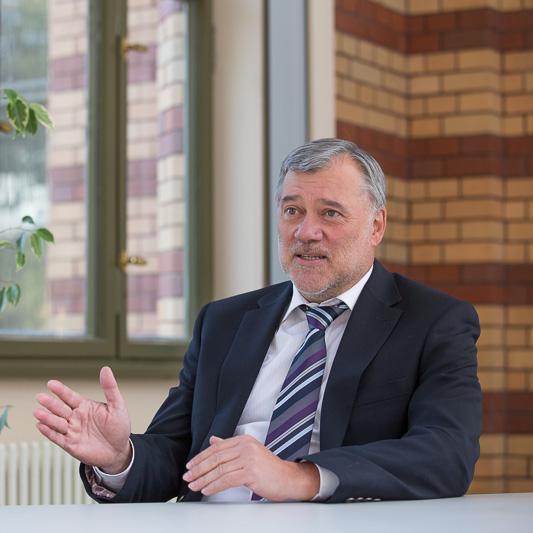
Prof. Dr. Dr. h.c. mult. Jürgen Kurths from Potsdam Institute for Climate Impact Research (PIK) oraz Humboldt University Berlin, Germany, presents lecteure : "Climate Tipping Points and Extreme Events: On their Identification and Forecasting'.
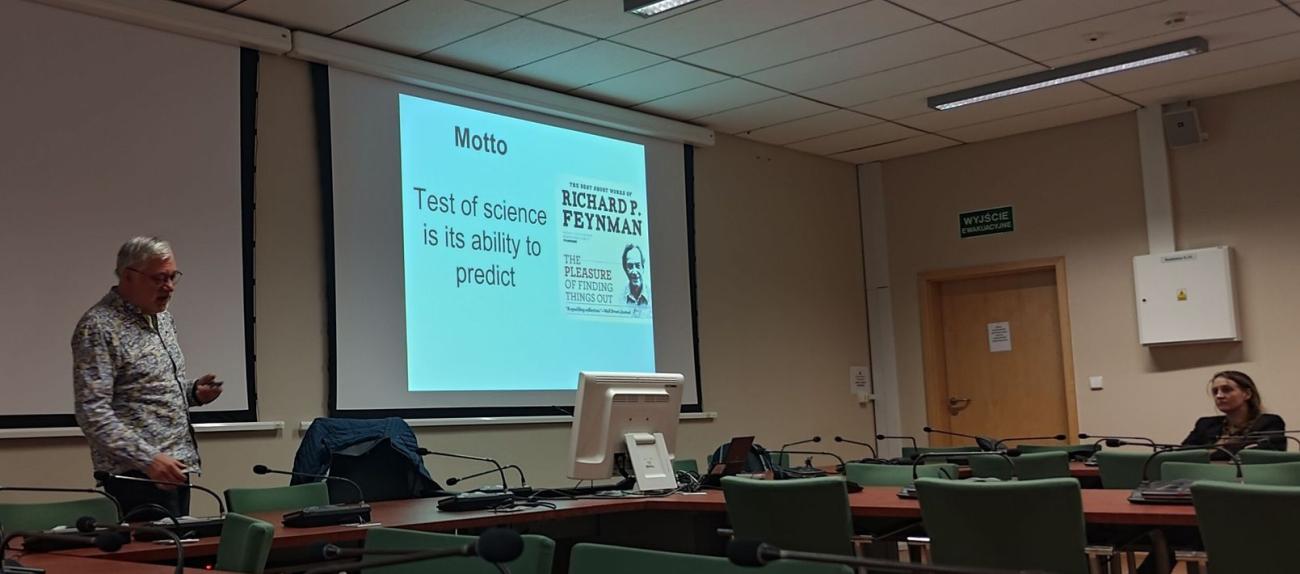
Abstract: The Earth system is a very complex and dynamical one basing on various feedbacks. This makes predictions and risk analysis even of very strong (sometime extreme) events as floods, landslides, heatwaves, and earthquakes etc. a challenging task. A highlight of this research was the pioneering studies by Hasselmann and Manabe who got the Physics Nobel Price in 2021. I will shortly review their main seminal contributions and discuss most recent challenges concerning climate change.
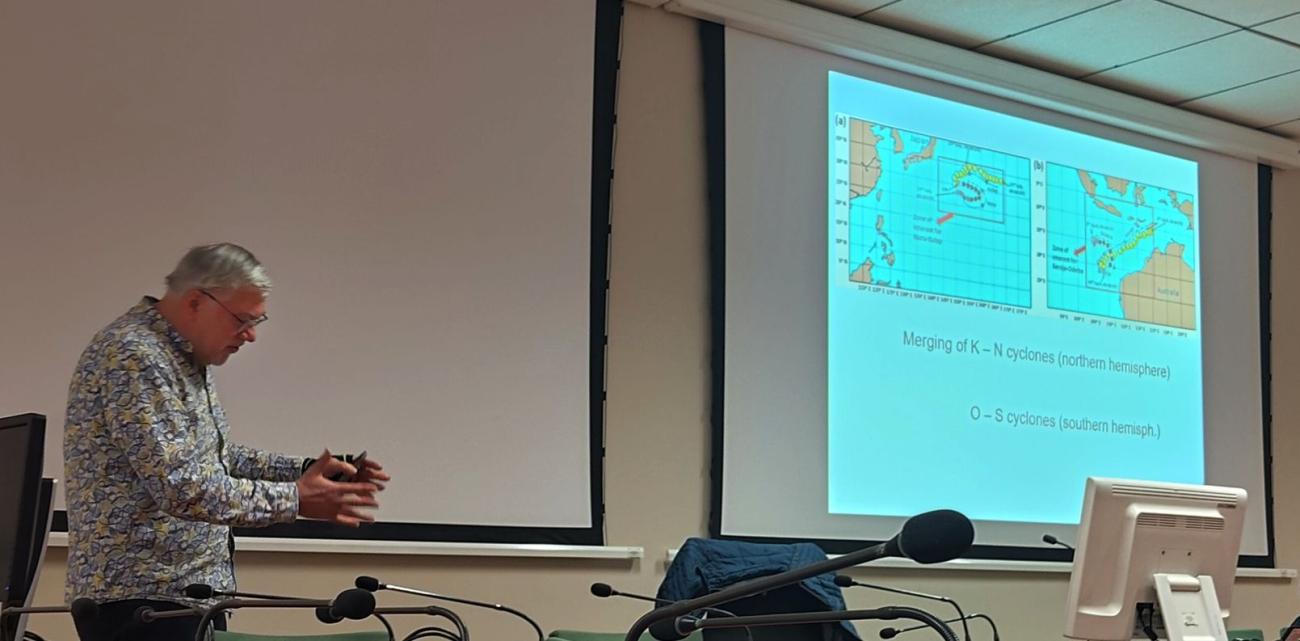
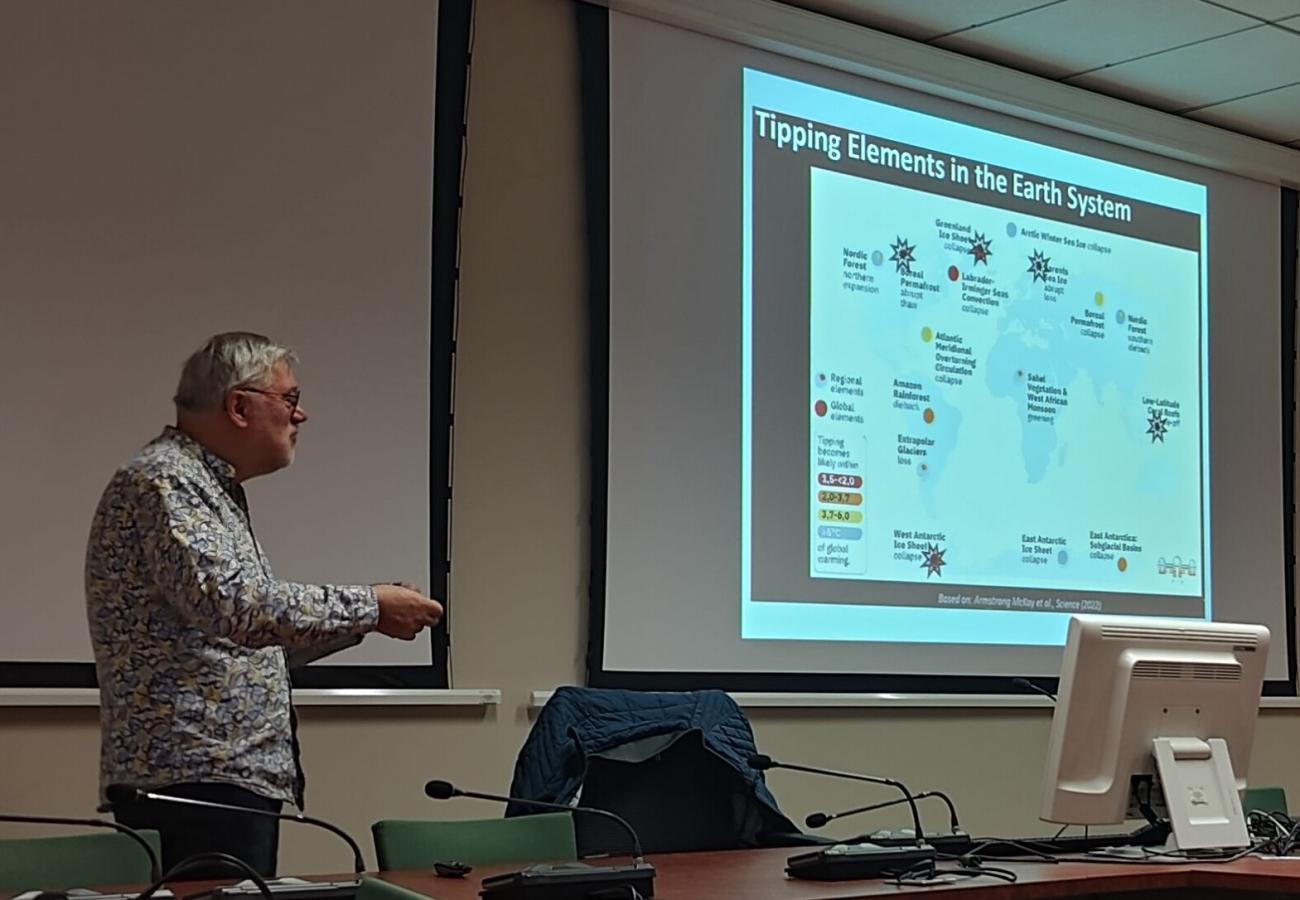
I discuss associated problems from a complex systems science perspective and introduce a recently developed approach via complex networks mainly to identify long-range interactions in the climate system. This leads to an inverse problem: Is there a backbone-like structure underlying the climate system? To treat this problem, we have proposed a method to reconstruct and analyze a complex network from spatio-temporal data. This approach enables us to uncover teleconnections among tipping elements, in
particular between Amazon Rainforest and the Tibetan Plateau. Implications of these findings in particular for forecasting extreme events are discussed.
Professor Jürgen Kurths is Senior Advisor at Research Department 4 “Complexity Science” at Potsdam Institute for Climate Impact Research (PIK) as well as Professor and Senior Advisor at Humboldt University Berlin. He is an expert in the fields of theoretical physics, complex systems science as well as applications to the Earth system, infrastructure (e.g. power grids), the human brain, and other systems which are characterized by a high degree of complexity and nonlinearity. Professor Jürgen Kurths maintains an
extensive network of scientific collaborators and has supervised more than 60 PhD students from around 20 countries, 30 of whom now hold tenured positions worldwide. He has published over 1,500 articles and eight books. His papers have been cited more than 85,000 times, and his h-index is 127. He currently serves on the editorial boards of more than ten scientific journals. Web-page of Professor Jürgen Kurths:
https://www.pik-potsdam.de/members/kurths
https://www.scopus.com/authid/detail.uri?authorId=35317963900
Image
Image
Image